Eliminate what is already there. Stop new ones from growing back. No harsh chemicals required (unless you want them).
Weeds in paver joints are one of the most frustrating outdoor maintenance problems a homeowner faces. The gap between stones is the perfect environment for them: warmth from the stone, trapped moisture, and no competition from other plants. The good news is that you can eliminate them, and with the right follow-up, you can stop them from ever coming back.
Weeds and grass growing up in between pavers, paths, cracks in driveways, sidewalks all give the appearance of a poorly maintained property; decreasing your property value.
These six methods cover the full range of situations, whether you want a fast kill today, a chemical-free approach, or a long-term fix you only have to do once.
Method 1
Boiling Water

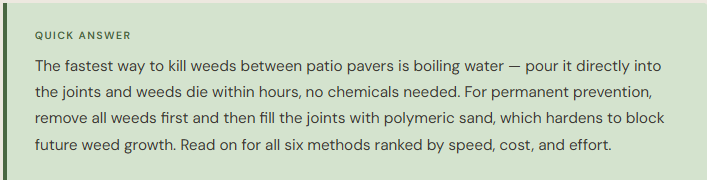
Boiling water is the simplest, fastest, and cheapest weed killer on this list. Boil a full kettle, carry it outside carefully, and pour a steady stream directly into the paver joints where weeds are growing. The extreme heat denatures plant proteins and destroys cell structure on contact. Most weeds will visibly wilt within a few hours and be fully dead by the next day.
This method works best on younger weeds and annual grasses. Deep-rooted perennial weeds like dandelions may regrow from the root and need a second treatment. It is completely safe for pets and children once the water cools and leaves no chemical residue in the soil. Avoid splashing onto nearby lawn or garden plants, as the heat is non-selective.
Pro tip: Do this on a dry, sunny day so the dead weeds dry out quickly, making them easier to sweep away the next morning.

Method 2
Manual Removal with a Paver Tool

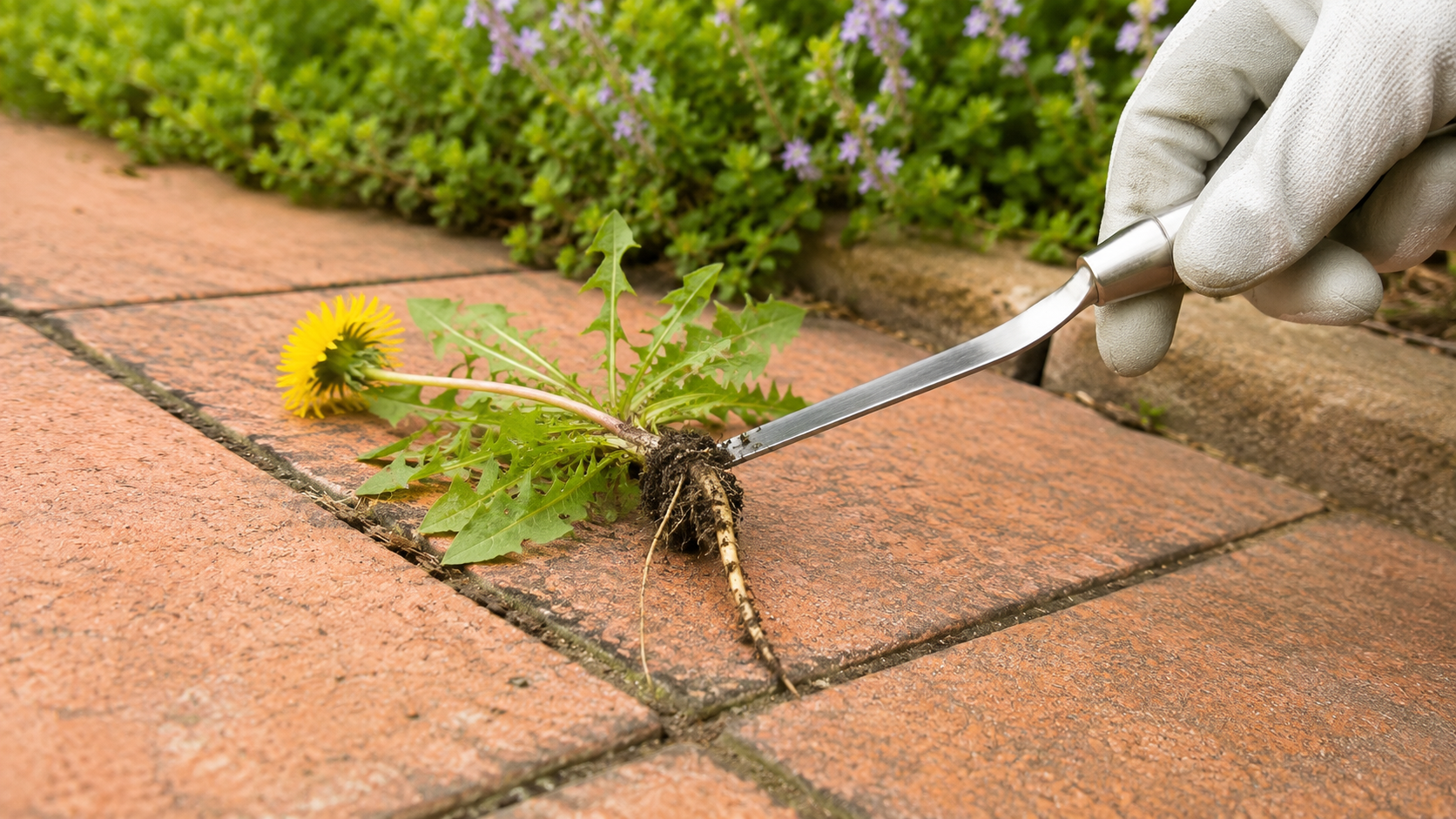
Pulling weeds by hand is the most complete removal method because it gets the root, not just the top growth. A dedicated paver weeding tool (sometimes called a crack weeder or joint scraper) makes the job dramatically faster. These narrow, hooked blades slip into paver joints and pry up the entire plant, root and all, in one motion.
For best results, do this after light rain or watering when the soil in the joints is soft. Dry, compacted joints make root extraction much harder and increase the chance of snapping the weed off at the crown, which allows it to regrow. Work methodically across one section at a time and drop the pulled weeds into a bucket rather than letting them drop back into the joints.
Pro tip: A V-shaped hoe or an oscillating stirrup hoe also works well for longer runs of straight joints between larger pavers.
Method 3
Horticultural Vinegar Solution

White household vinegar (5% acetic acid) offers some weed-killing effect, but the product you actually want is horticultural vinegar at 20 to 30 percent concentration, available at garden centers and online. At that strength, it burns through plant tissue and kills top growth within 24 hours.
Mix one litre of horticultural vinegar with a tablespoon of dish soap (which helps it cling to the leaves) and optionally one cup of table salt. Pour into a spray bottle and apply directly to weeds on a dry, sunny day. Avoid rain for at least 24 hours after application. Be careful to apply only to the weeds, the solution will kill any plant it touches, including grass or ornamentals growing nearby.
One important limitation: vinegar kills what is above the ground but does not always penetrate deep enough to kill the root. Persistent perennial weeds may need two or three applications. For those, combining vinegar treatment with manual root removal gives the best result.
Pro tip: Do not use on pavers that are polished or sealed, high-acid solutions can etch certain stone surfaces. Test on an inconspicuous area first.

Method 4
Propane Flame Weeder

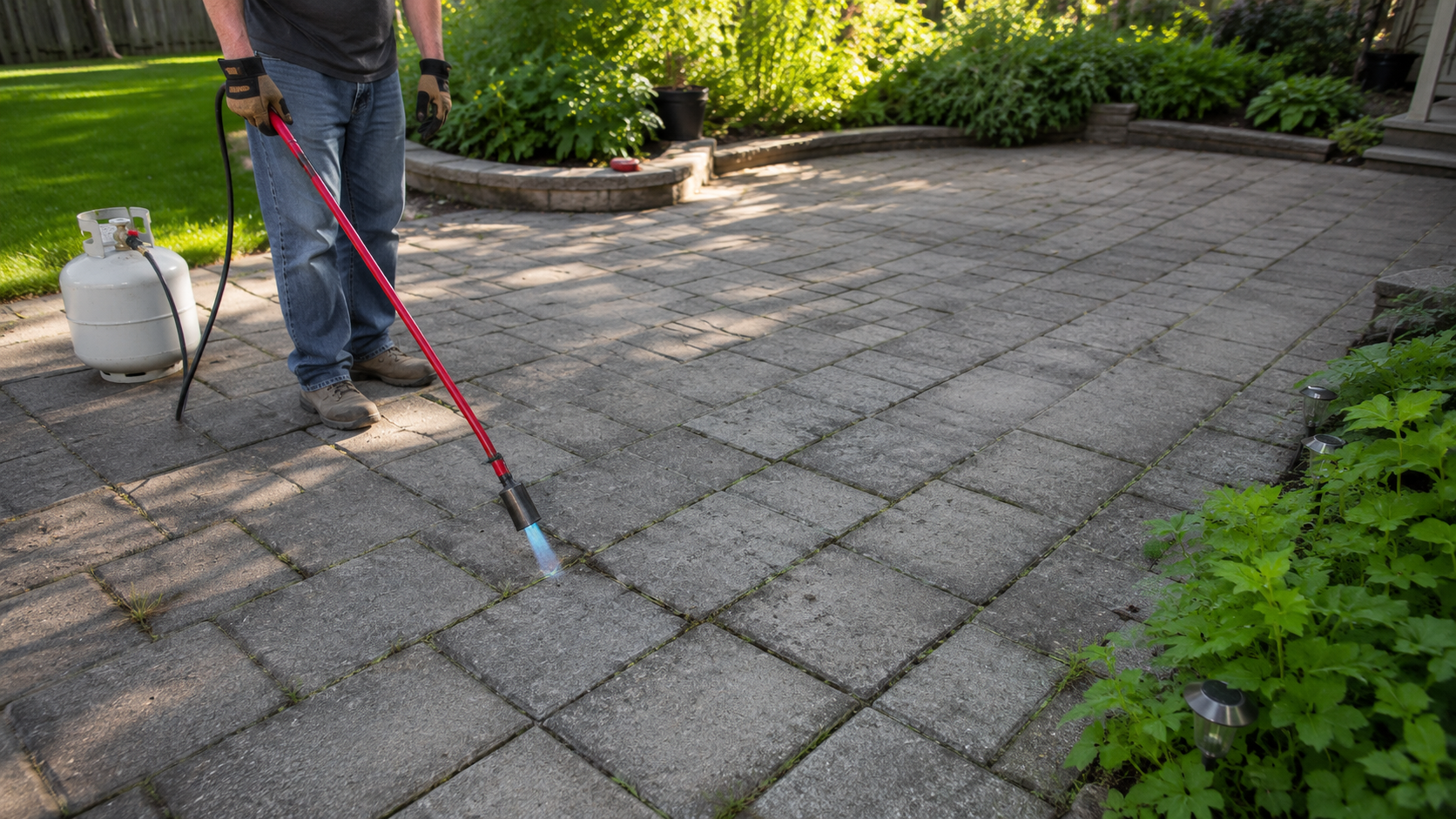
A propane flame weeder is a wand connected to a small propane tank that produces a focused jet of flame. You do not need to incinerate the weed, a slow pass of one to two seconds per plant is enough to boil the water inside plant cells, causing irreversible damage. Weeds collapse and die within a day.
This method is fast across large paved areas and leaves absolutely no chemical residue. It is particularly effective on grass and annual weeds in wide joints. Concrete and brick pavers handle brief flame exposure without any damage. Avoid using it near wooden structures, garden edging, dried mulch, or during fire advisories. In areas with fire bans, choose a different method.
How to use it: Work slowly in a sweeping motion along the joints. A brief wilting after treatment is a good sign, it means the cells have been destroyed. You do not need to see the plant burn. Sweep or blow the dead material off the patio after 24 hours.
Method 5
Targeted Herbicide

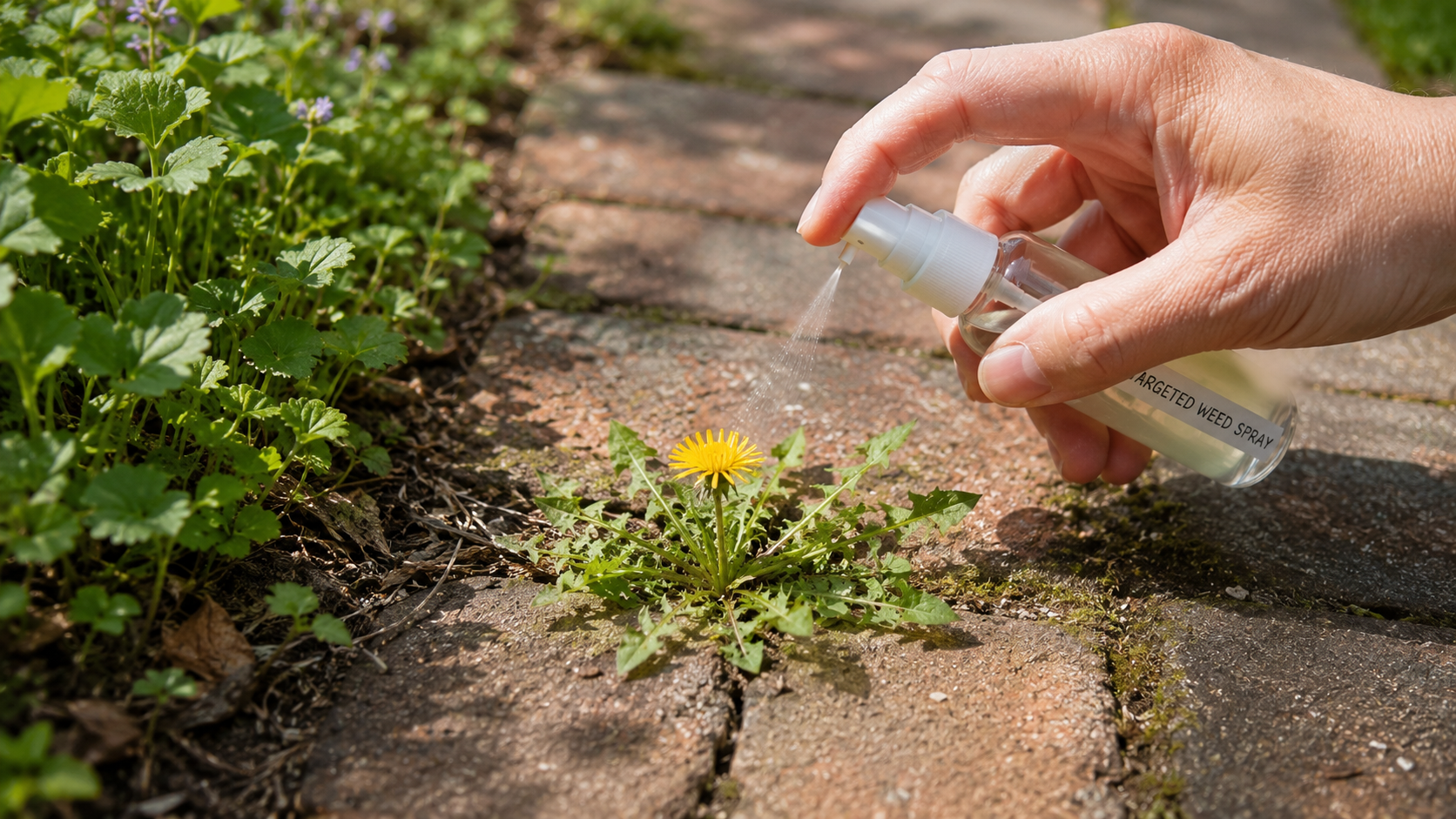
For persistent perennial weeds with deep taproots, dandelions, bindweed, creeping thistle, a targeted herbicide may be the most practical option. Glyphosate-based products (sold under names like Roundup) and triclopyr-based formulas kill both the top growth and the root system, preventing regrowth.
The key is precision. Use a ready-to-use trigger spray bottle rather than a pump sprayer, and apply directly to each weed. Avoid contact with surrounding lawn, plants, or soil where you do not want chemical activity. Read the label carefully for reapplication intervals and safety precautions. Many products require staying off the treated area until dry.
Selective vs. non-selective: Non-selective herbicides like glyphosate kill anything green they touch. If you have creeping thyme or other ground cover growing in your joints intentionally, use a selective product matched to the weed type you are targeting.
Pre-emergent herbicides are a separate category worth knowing about: applied to clean, weed-free joints in early spring, they prevent weed seeds from germinating at all. They are one of the most effective prevention tools available.
Method 6
Polymeric Sand: The Permanent Fix

Every method above kills weeds. Only this one prevents them. Polymeric sand is a fine sand blended with silica and binding polymers that, when activated with water, hardens into a firm, flexible compound inside paver joints. It physically prevents weed seeds from settling and germinating, blocks ants, and locks pavers in place.
This is the right finishing step after any of the methods above. Once weeds are removed and joints are cleared, you are ready to install it.
How to Apply Polymeric Sand
Step 1 — Remove all weeds and debris. Use method 1, 2, or 4 first and wait until joints are fully dry. Dead material left in joints will decompose under the sand.
Step 2 — Blow out the joints. A leaf blower run along the joints clears dust, old sand, and weed fragments. Joint depth should ideally be at least 1 inch for the sand to hold properly.
Step 3 — Pour and sweep. Pour polymeric sand over the patio surface and sweep it into the joints with a stiff broom, working in multiple directions. Overfill slightly, as the sand settles when compacted.
Step 4 — Compact and repeat. Use a plate compactor (rentable from hardware stores) or a hand tamper to vibrate the sand deeper into joints. Add more sand and sweep again.
Step 5 — Clear the surface and activate. Blow off all excess sand from the paver surface — any left behind will haze when wet. Then lightly mist the entire patio with water three times, waiting 15 minutes between applications. The polymers activate and the sand begins to harden.
Step 6 — Stay off it. Allow 24 to 48 hours of cure time before foot traffic and 72 hours before vehicle or heavy load traffic.

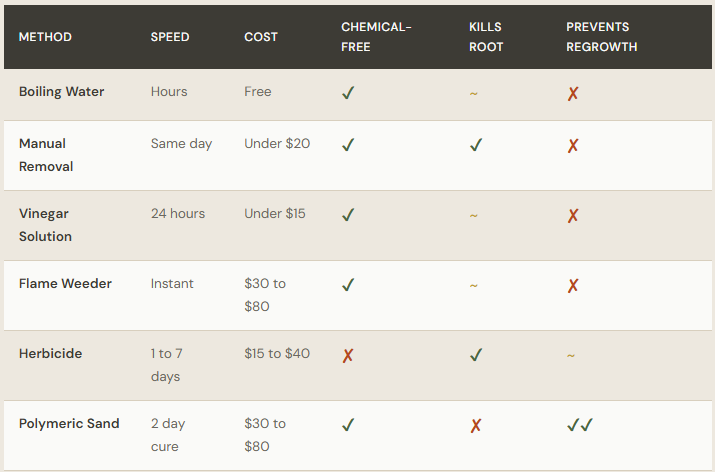
Quick Comparison: Which Method Is Right for You?
Frequently Asked Questions
What is the fastest way to kill weeds between pavers?
Boiling water is the fastest method — weeds begin dying within hours and the process costs nothing. For instant results without waiting, a propane flame weeder kills plant cells on contact and the weed collapses by the following day.
Does vinegar permanently kill weeds between pavers?
Horticultural vinegar (20% acetic acid) burns through top growth very effectively within 24 hours, but it does not always penetrate deep enough to kill the root. You may need two or three applications. Combining vinegar treatment with manual root removal gives the most thorough result.
How do I stop weeds from growing between pavers permanently?
The most durable solution is to remove all existing weeds, clear the joints, and fill them with polymeric sand. When properly installed and activated with water, polymeric sand hardens into a surface that physically blocks weed seeds from settling and germinating. It typically lasts three to five years before joints need refreshing.
Is it safe to use a weed burner on patio pavers?
Yes. A propane flame weeder is safe on concrete, brick, and natural stone pavers. Brief exposure to the flame does not damage the stone. Avoid using it near wooden fences, decking, dry mulch, or dead plant material, and check local fire restrictions before use.
Will bleach kill weeds between pavers?
Bleach will kill weeds but it is not recommended. It can discolour and damage certain paver types, harm nearby lawn and garden plants, and degrade soil health. Boiling water, horticultural vinegar, or a targeted herbicide are safer and more controllable options.
How often does polymeric sand need to be reapplied?
Polymeric sand typically lasts three to five years in good condition. Heavy rainfall, pressure washing, and foot or vehicle traffic are the main causes of joint erosion. When joints begin to look empty or weeds reappear, it is time to clean and reapply.
Can I use a pressure washer to remove weeds from pavers?
A pressure washer will blast weed debris out of joints but it also removes the sand and any existing polymeric sand along with it. If you use one, treat it as preparation for a full joint-sand replacement rather than a standalone weed removal method.
Ready to Reclaim Your Patio?
Start with boiling water today for a fast fix, then follow up with polymeric sand for the long-term solution. Your patio will thank you.
About Chris Marshall | Chris Marshall is an Associate Broker and REALTOR with RE/MAX House of Real Estate, serving buyers and sellers across Calgary and surrounding communities. A Certified Condominium Specialist with over 23 years of Calgary market experience, Chris specializes in helping clients navigate all stages of their real estate journey, including downsizing. Visit chrismarshallrealtor.com or call 403 585 5362.
Looking for a particular lifestyle:
Looking for community info, market stats & schools:
About Chris Marshall | Chris Marshall is an Associate Broker and REALTOR with RE/MAX House of Real Estate, serving buyers, sellers, and investors across Calgary and surrounding communities including Okotoks, Airdrie, Cochrane, Chestermere, Langdon, High River, Springbank, Priddis, Bragg Creek, and rural Rocky View, Foothills, and Wheatland Counties. A Certified Condominium Specialist with over 23 years of experience, Chris is committed to honest, client first service. Call 403 585 5362.
Other Blogs:
How to Repair Dead Grass in Calgary and Bring Your Lawn Back to Life
How to Create a Pet-Friendly Backyard (even if your don’t own a pet)
How to Create Privacy in Your Backyard (with and without trees)
10 Signs You Have Too Much Stuff and Not Enough Space (And What to Do About it)
How to Downsize Your Home: A Step-by-Step Guide (without the stress)
Downsize or Age in Place? Making the right Choice for Your Golden Years
Quick and Easy Home Improvements that Instantly Refresh your Space
Comments:
Post Your Comment: