A healthy green lawn can completely transform the look of a home in Calgary. After a long winter, drought conditions, pet damage, snow mold, voles, chinooks, or heavy foot traffic, many homeowners notice brown patches, thinning grass, or areas that appear completely dead. The good news is that most lawns can recover with the right repair process and proper timing.
Whether you are preparing your home for summer enjoyment or improving curb appeal before listing your property, repairing dead grass can make a major difference in the appearance and value of your home.
Why Grass Dies in Calgary
Calgary lawns face unique climate challenges throughout the year. Common causes of dead grass include:
Winter kill from extreme cold and dry winds
Snow mold after long periods of snow coverage
Salt damage near sidewalks and driveways
Dog urine spots
Voles tunneling in the winter
Drought stress during hot summers
Soil compaction from foot traffic
Grub or insect damage
Improper mowing practices
Thatch buildup that blocks moisture and nutrients
Before repairing your lawn, it is important to determine whether the grass is dormant or truly dead. Dormant grass often returns once temperatures warm and moisture increases, while dead grass will pull out easily and leave bare soil underneath.
Step 1: Rake and Remove Dead Grass
The first step is to clear away all dead material so the soil can breathe and new seed can make direct contact with the ground.
Use a hard rake or dethatching rake to remove:
Dead grass
Thatch buildup
Leaves and debris
Matted areas caused by snow mold
This process also loosens compacted soil and improves airflow.
Step 2: Loosen and Improve the Soil
Many Calgary lawns have clay heavy soil that becomes compacted over time. Grass roots struggle to grow in hard soil, especially after winter freeze and thaw cycles.
Use a garden rake or aerator to loosen the top layer of soil. Add a thin layer of quality lawn soil or compost to improve drainage and provide nutrients.
Aim for approximately one half inch of fresh topsoil over damaged areas.
Step 3: Choose the Right Grass Seed for Calgary
Not all grass seed performs well in Alberta’s climate. Look for seed blends designed specifically for cool season northern lawns.
The best seed mixes for Calgary often include:
Kentucky bluegrass
Perennial ryegrass
Fine fescue
These varieties handle cold temperatures, drought conditions, and temperature swings better than many alternatives.
Spread seed evenly across repaired areas. For best results:
Apply seed generously but evenly
Lightly rake the seed into the soil
Avoid burying the seed too deeply
Don’t let the birds eat the seeds!
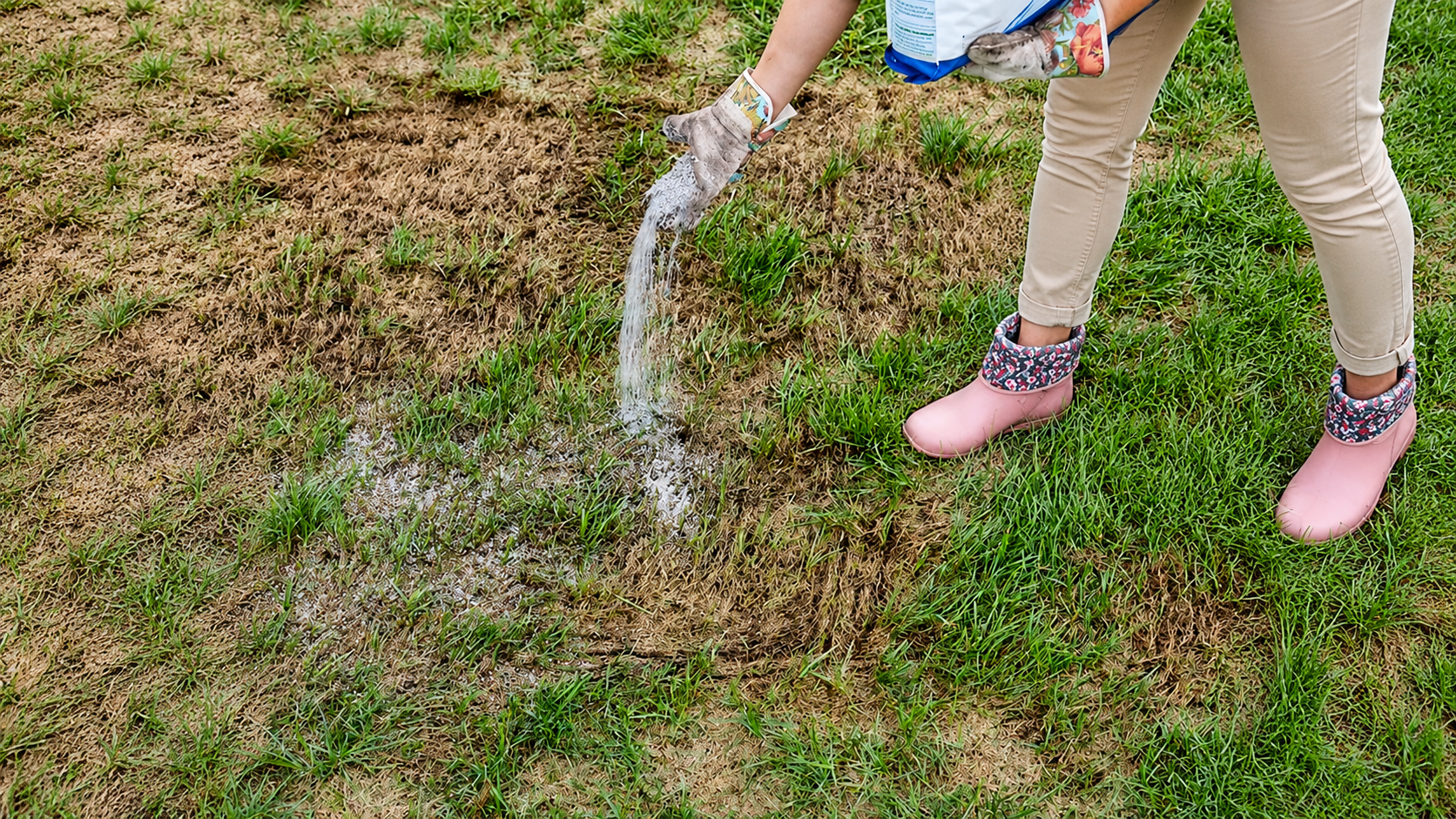
Step 4: Add Lawn Fertilizer
New grass needs nutrients to establish strong roots quickly. Use a starter fertilizer designed for new seed growth.
A balanced fertilizer encourages:
Root development
Faster germination
Improved color
Better drought resistance
Avoid over fertilizing, especially during hot weather, as it can burn young grass.
Step 5: Water Properly
Consistent watering is critical during the first few weeks after seeding.
For newly repaired areas:
Water lightly once or twice daily
Keep the soil consistently moist
Avoid puddling or runoff
Reduce watering frequency once grass begins growing
Most grass seed germinates within 7 to 21 days depending on temperature and moisture.

Step 6: Avoid Heavy Traffic
New grass seedlings are delicate. Try to keep pets, children, and heavy equipment off repaired areas until the lawn becomes established.
Avoid mowing until the grass reaches approximately 3 inches tall. Use a sharp mower blade and never remove more than one third of the grass height at a time.
Common Lawn Repair Mistakes
Many homeowners accidentally slow lawn recovery by making a few common mistakes:
Seeding without soil preparation
Watering too heavily or too little
Using the wrong seed blend
Cutting grass too short
Fertilizing during extreme heat
Ignoring compacted soil
Patience and consistency are key to restoring a healthy lawn.
When to Repair Dead Grass in Calgary
The best times for lawn repair in Calgary are:
Spring
Late April through early June provides cool temperatures and good moisture for seed germination.
Early Fall
Late August through September is often ideal because soil remains warm while air temperatures cool down.
Avoid reseeding during peak summer heat whenever possible.
Lawn Repair and Curb Appeal
A healthy lawn improves more than just outdoor enjoyment. It also boosts curb appeal and creates a stronger first impression for buyers.
If you are considering selling your home in Calgary, lawn condition can influence how buyers perceive the overall maintenance of the property. Fresh green grass makes homes appear cleaner, newer, and better cared for.
For homeowners preparing to sell, simple landscaping improvements like lawn repair can provide excellent value.
Repairing dead grass in Calgary is usually a straightforward process when done at the right time with proper preparation. By removing dead material, improving soil quality, choosing the correct seed, and watering consistently, most lawns can recover beautifully within a few weeks.
A greener lawn not only improves outdoor living space but also enhances curb appeal and overall property value throughout Calgary’s competitive real estate market.
Looking for a particular lifestyle:
Looking for community info, market stats & schools:
About Chris Marshall | Chris Marshall is an Associate Broker and REALTOR with RE/MAX House of Real Estate, serving buyers, sellers, and investors across Calgary and surrounding communities including Okotoks, Airdrie, Cochrane, Chestermere, Langdon, High River, Springbank, Priddis, Bragg Creek, and rural Rocky View, Foothills, and Wheatland Counties. A Certified Condominium Specialist with over 23 years of experience, Chris is committed to honest, client first service. Call 403 585 5362.
Comments:
Post Your Comment: