Are Home Wellness Features Worth the Investment?
Imagine stepping outside into a crisp Calgary winter evening, slipping into a warm hot tub beneath the stars, or unwinding in a private sauna after a day on the ski hill. For many homeowners, these features offer a little everyday luxury and a welcome escape from the demands of daily life.
But when it comes to real estate, there is another question worth considering: Do saunas and hot tubs actually add value to your Calgary home?
As wellness-focused home design becomes more popular, saunas, hot tubs, cold plunges, and dedicated relaxation spaces are attracting attention. These amenities can make a property more distinctive, particularly in a climate where outdoor living and indoor comfort are both important.
However, the financial return is not always straightforward. A beautifully integrated sauna or well-maintained hot tub may appeal to certain buyers, but neither guarantees a higher selling price or a dollar-for-dollar return on installation costs.
Let's look at the different types of saunas and hot tubs, their potential impact on Calgary property values, and what homeowners should consider before investing.
Do Saunas and Hot Tubs Increase Home Value in Calgary?
The short answer is that they can improve buyer appeal, but they do not automatically increase a home's appraised value by the amount spent on installation.
Real estate value is influenced by location, comparable sales, property condition, layout, and buyer demand. Specialty amenities are generally considered in the context of the entire property rather than assigned a guaranteed resale value.
A sauna or hot tub may help a home stand out when it complements the property and appeals to the buyers most likely to purchase it.
For example, a thoughtfully designed outdoor sauna in a private backyard may enhance the appeal of an executive home. A hot tub integrated into an attractive deck with privacy screening may make an outdoor entertaining space feel more inviting.
On the other hand, an aging hot tub taking up most of a small backyard could be a disadvantage for buyers who prefer open lawn space or low-maintenance landscaping.
The important distinction is between lifestyle value and financial return. You may enjoy years of use from a wellness feature even if you do not recover its entire cost when selling.
Types of Home Saunas: Which Is Best for Your Property?
Home saunas range from compact prefabricated cabins to custom-built wellness rooms. The right option depends on available space, budget, installation requirements, and the overall style of your home.
1. Traditional Finnish Sauna
A traditional Finnish-style sauna uses an electric or wood-burning heater to warm the air and stones inside an insulated room. Water may be poured over the hot stones to create a burst of steam and humidity.
Traditional saunas are commonly finished in wood such as cedar, hemlock, or spruce, with built-in benches and carefully planned ventilation.
Potential real estate appeal: A well-designed, permanently installed sauna can feel like a premium home feature, particularly when it is incorporated into a finished basement, spa-inspired bathroom, or dedicated wellness room.
In Calgary, an indoor sauna offers year-round usability without requiring homeowners to step outside into winter conditions.
Best suited for: Homeowners who want a classic sauna experience and have space for a permanent installation.
2. Infrared Sauna
Infrared saunas use infrared heating elements to warm the body directly rather than relying primarily on heating the surrounding air. They typically operate at lower air temperatures than traditional saunas.
Many infrared models are available as compact prefabricated cabins designed for one or two people. Larger models are also available.
Potential real estate appeal: An infrared sauna can be attractive to buyers interested in home wellness, particularly when it fits neatly into a finished basement, fitness room, or dedicated relaxation area.
A freestanding cabin may be treated more like removable personal property than a permanent home improvement, depending on how it is installed and the terms of the sale.
Best suited for: Homeowners who want a compact sauna with a relatively straightforward installation.
3. Outdoor Barrel Sauna
Outdoor barrel saunas have a distinctive cylindrical shape and are typically constructed from wood. Their curved design creates a recognizable Scandinavian-inspired look.
They are often installed on a prepared base in a backyard, beside a deck, or in a landscaped outdoor retreat.
Potential real estate appeal: In Calgary, an outdoor sauna can create a distinctive four-season backyard experience. A thoughtfully positioned model surrounded by attractive landscaping, privacy screening, and outdoor lighting may be particularly appealing in the right property.
However, buyers may also consider snow clearance, access, maintenance, and the condition of the exterior wood.
Best suited for: Detached homes with sufficient yard space and homeowners who enjoy outdoor wellness.
4. Custom-Built Indoor Sauna
A custom-built sauna is designed specifically for the home rather than purchased as a standalone cabin. It may be incorporated into a basement renovation, ensuite, home gym, or dedicated spa room.
Depending on the design, it may include custom woodwork, glass doors, built-in lighting, and integrated changing or relaxation areas.
Potential real estate appeal: A high-quality, professionally constructed sauna can feel like part of the home's original design rather than an added appliance. This integration may strengthen its appeal in higher-end properties.
The trade-off is cost. Custom construction, electrical work, insulation, ventilation, and moisture management can make this a considerably larger project than purchasing a prefabricated unit.
Best suited for: Homeowners undertaking a substantial renovation or creating a dedicated wellness space.
5. Steam Room
Although often discussed alongside saunas, a steam room is technically different. It produces a warm, highly humid environment using a steam generator and a carefully waterproofed enclosure.
Steam rooms commonly feature tile, stone, glass, and sealed surfaces rather than the traditional wood interior of a dry sauna.
Potential real estate appeal: A professionally designed steam room can complement a luxury ensuite or spa-inspired bathroom. Its success as a selling feature depends on the quality of the installation and how well it integrates with the rest of the home.
Because moisture management is critical, buyers may want documentation of the waterproofing, ventilation, and equipment installation.
Best suited for: Homes with a well-designed ensuite or dedicated spa bathroom.
Comparing the Different Types of Saunas
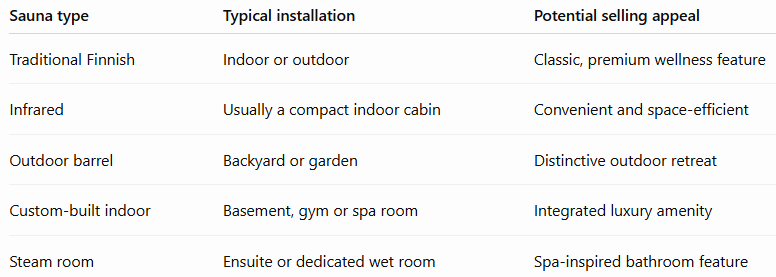
No single type guarantees the best return. A permanent installation that suits the home's design and target market may have greater contributory value than a portable unit, but actual buyer demand and comparable properties matter most.
Types of Hot Tubs: From Portable Spas to Luxury Outdoor Retreats
Hot tubs are another popular way to create a relaxing outdoor space. They vary considerably in construction, features, installation requirements, and ongoing maintenance.
1. Portable Acrylic Hot Tub
Acrylic hot tubs are among the most familiar residential models. They typically feature moulded seating, massage jets, integrated controls, filtration, and insulated cabinets.
They are available in different sizes, from compact two-person models to larger family spas.
Potential real estate appeal: A clean, fully functioning acrylic hot tub with an attractive surround may complement a well-designed backyard. Buyers are more likely to appreciate it when the unit is in good condition and does not dominate the available outdoor space.
An older spa with worn surfaces, unreliable equipment, or a damaged cover can instead become a maintenance concern.
2. Plug-and-Play Hot Tub
Plug-and-play hot tubs are designed to operate using a standard electrical outlet, subject to the manufacturer's requirements and local electrical rules.
They are often smaller and simpler than larger permanently wired spas, although electrical and operating requirements vary by model.
Potential real estate appeal: Their portability and compact size can make them suitable for homeowners who want the enjoyment of a hot tub without committing to a large backyard installation.
However, a removable unit is not necessarily a permanent property improvement, and buyers may not assign it additional real estate value.
3. Inflatable Hot Tub
Inflatable hot tubs are made from flexible materials and can generally be assembled and removed more easily than permanent models.
They offer a lower-commitment option for people who want to try having a hot tub without undertaking major landscaping or construction.
Potential real estate appeal: Inflatable models are primarily lifestyle accessories rather than substantial property upgrades. They are unlikely to have a meaningful effect on appraised home value.
For sellers, it may be preferable to remove an inflatable model before listing if it makes a patio or deck feel crowded.
4. Swim Spa
A swim spa is a larger unit that combines a hot tub-style seating area with a current for swimming or aquatic exercise. Some models also offer adjustable water temperatures in separate sections.
Swim spas require careful planning because of their size, weight, electrical requirements, and support needs.
Potential real estate appeal: A swim spa may be attractive to buyers looking for a dedicated fitness and wellness feature, particularly in larger or higher-end homes.
However, the installation cost, operating expenses, space requirements, and specialized maintenance can limit its appeal to some buyers.
5. In-Ground or Custom-Built Spa
A custom spa can be incorporated into a landscaped backyard, outdoor entertaining area, or pool design. It may use concrete, stone, tile, or other permanent construction materials.
Potential real estate appeal: When designed as part of a cohesive outdoor living space, a custom spa may contribute to the overall impression of a luxury property.
Its financial contribution depends on comparable homes, the quality of construction, ongoing maintenance requirements, and whether buyers in that market value the feature.
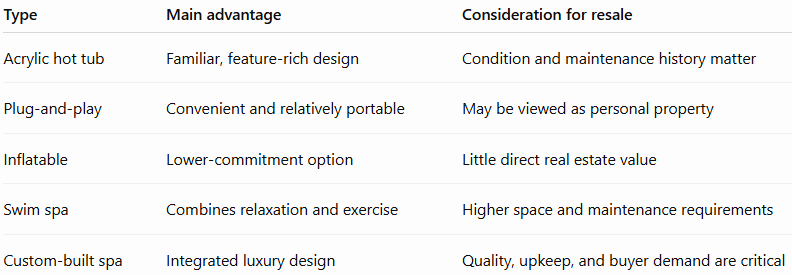
Hot Tub Comparison: Which Is Best for Resale?
Why Calgary's Climate Can Make Saunas and Hot Tubs Appealing
Calgary's long winters and changing seasons create opportunities for outdoor amenities that can be enjoyed beyond the summer months.
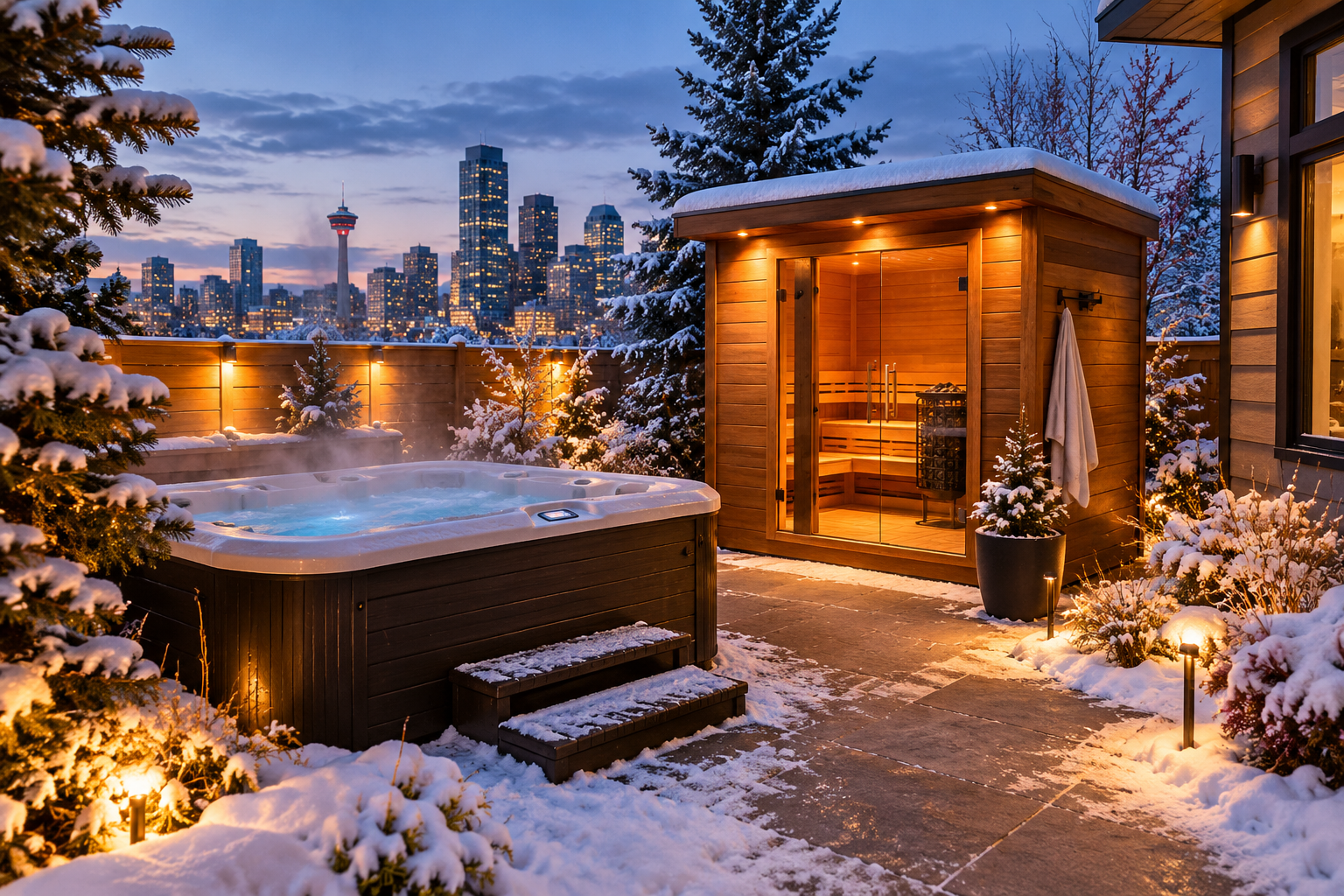
A well-insulated hot tub can provide an inviting outdoor retreat even when temperatures fall. An outdoor sauna can complement a landscaped yard, while an indoor sauna offers a private place to unwind regardless of the weather.
These features may also complement other desirable home improvements, such as:
Covered patios and sheltered seating areas
Privacy screens and mature landscaping
Outdoor lighting and attractive pathways
Well-designed decks and entertaining spaces
Finished basements with fitness or relaxation areas
Energy-efficient windows, insulation, and mechanical systems
The broader setting matters. A hot tub surrounded by tasteful landscaping and comfortable seating can feel like an intentional extension of the home. The same hot tub placed awkwardly beside a fence with exposed cables and limited access may have considerably less appeal.
For Calgary homeowners, durability is particularly important. Equipment, exterior finishes, insulation, and covers should be appropriate for local winter conditions.
How Much Value Can a Sauna or Hot Tub Add to Your Calgary Home?
There is no reliable universal percentage or dollar amount that can be applied to every Calgary property.
Unlike more conventional improvements, such as an additional bathroom or a well-executed kitchen renovation, saunas and hot tubs are specialized amenities. Their contribution to market value depends on how buyers respond to them and what comparable properties demonstrate.
Consider three hypothetical examples:
Scenario 1: An executive home with a custom wellness room
A permanent sauna integrated into a professionally finished basement may complement the home's overall quality and appeal to buyers looking for a wellness-focused lifestyle.
Scenario 2: A family home with a well-maintained backyard hot tub
A clean hot tub on a properly designed deck, with privacy screening and attractive landscaping, may help make the outdoor area more inviting.
Scenario 3: A home with an aging, poorly maintained spa
A damaged or unreliable hot tub may create uncertainty about repairs, operating costs, and removal. In this situation, servicing or removing the unit may be worth considering before listing.
These examples illustrate why installation cost alone is not a reliable measure of resale value.
The most important question is not how much you spend, but how much the feature contributes to the overall property in the eyes of prospective buyers.
Should You Install a Sauna or Hot Tub Before Selling Your Home?
If you are planning to sell your Calgary home soon, it is worth thinking carefully before investing in a new sauna or hot tub solely to increase its value.
In many cases, your money may be better spent on improvements with broader buyer appeal, such as repairing visible defects, refreshing paint, improving lighting, enhancing curb appeal, or preparing the property for professional photography.
However, if you already own a sauna or hot tub, there are several steps you can take to present it well.
If You Have a Sauna
Clean the interior and exterior thoroughly.
Check the heater, controls, lighting, and ventilation.
Repair visible damage and address any moisture concerns.
Keep the surrounding space uncluttered.
Gather installation, maintenance, and warranty documentation.
Ensure the feature is presented as a natural part of the home.
If You Have a Hot Tub
Have the unit serviced if needed.
Clean the shell, filters, and cover.
Check that the controls and equipment function correctly.
Make sure the cover fits properly and is in good condition.
Tidy the surrounding deck, patio, and landscaping.
Keep maintenance records and relevant installation documentation.
Decide whether the hot tub will be included in the sale and ensure the purchase agreement clearly addresses it.
If the hot tub is old, damaged, or rarely used, discuss whether keeping it, repairing it, or removing it makes the most sense for your property and target buyer.
Permits and Installation Considerations in Calgary
Before installing a sauna or hot tub, homeowners should investigate applicable permits, electrical requirements, building requirements, and property restrictions.
The City of Calgary states that hot tubs capable of holding more than 0.6 metres (approximately two feet) of water typically require a building permit and an electrical permit. Depending on the location and design, planning approval may also be required. Hot tubs installed on elevated structures may require additional engineering documentation. Requirements can vary with the project, so confirm the applicable rules before construction.
Permanently installed hot tubs must be wired by a qualified electrical contractor, and electrical capacity should be checked before installation.
For saunas, electrical, ventilation, structural, and other requirements depend on the equipment and installation. A custom-built room or an outdoor structure may have different requirements from a freestanding indoor cabin.
If you live in a condominium or townhouse, check the applicable condominium documents, board approval requirements, and restrictions before proceeding.
For current information, consult the City of Calgary's hot tub and swimming pool requirements and electrical permit guidance.
Frequently Asked Questions About Saunas, Hot Tubs and Real Estate
Do saunas add value to a house in Calgary?
A sauna can improve a home's appeal to buyers interested in wellness and luxury features. A professionally installed, well-maintained sauna that complements the property may contribute to its overall marketability, but there is no guaranteed increase in appraised value.
Does a hot tub increase property value?
A hot tub may improve buyer interest when it is in excellent condition and integrated into an attractive outdoor space. However, buyers may also consider maintenance, operating expenses, age, and removal costs. A higher sale price is not guaranteed.
Is an indoor or outdoor sauna better for resale?
Neither is automatically better. An indoor sauna may appeal to buyers who prefer a private, year-round wellness room, while an outdoor sauna may suit a home with a spacious, landscaped backyard. The best option depends on the property's design and target market.
Do portable saunas and hot tubs add value?
Portable models generally function more like personal belongings than permanent improvements. They may be included in a sale by agreement, but homeowners should not assume that their purchase price will translate into additional real estate value.
Should I remove my hot tub before selling?
Not necessarily. If the hot tub is clean, functional, and attractive, it may be worth keeping. If it is damaged, poorly maintained, or takes up valuable outdoor space, removing it may improve the presentation of the property.
Are saunas becoming a desirable home feature?
Home wellness spaces are attracting attention among some buyers, particularly those who value fitness, relaxation, and private spa-style amenities. However, demand varies by price range, property type, and individual preference.
What adds more value: a sauna, a hot tub, or a renovated bathroom?
A renovated bathroom may appeal to a broader range of buyers because it serves an essential function. Saunas and hot tubs are more specialized amenities. The best investment depends on the home's existing condition, the cost of the improvement, and local buyer demand.
The Bottom Line: Invest in Enjoyment, Then Consider Resale
Saunas and hot tubs can turn an ordinary home into a more inviting place to relax, entertain, connect with family, and enjoy Calgary's changing seasons. For homeowners who will use them regularly, the lifestyle benefits may make the investment worthwhile even without a guaranteed financial return.
From a real estate perspective, the best results generally come when these amenities are well maintained, appropriately installed, and thoughtfully integrated into the home.
If you are considering selling, the decision should be based on your property's current condition, the expectations of prospective buyers, and the improvements most likely to support your selling goals.
Thinking about selling your Calgary home? Contact Chris Marshall Calgary Realtor for a home evaluation and personalized advice about which improvements are worth making before you list.
About Chris Marshall | Chris Marshall is an Associate Broker and REALTOR with RE/MAX House of Real Estate, serving buyers and sellers across Calgary and surrounding communities. A Certified Condominium Specialist with over 23 years of Calgary market experience, Chris specializes in helping clients navigate all stages of their real estate journey. Visit chrismarshallrealtor.com or call 403 585 5362.
Looking for community info, market stats & schools:
Looking for a particular lifestyle:
Other Blogs:
How to Repair Dead Grass in Calgary and Bring Your Lawn Back to Life
How to Create a Pet-Friendly Backyard (even if your don’t own a pet)
How to Create Privacy in Your Backyard (with and without trees)
Downsize or Age in Place? Making the right Choice for Your Golden Years
Quick and Easy Home Improvements that Instantly Refresh your Space
Gas vs. Electric vs. Wood Fireplace: Which Is Best for Your Calgary Home?
Comments:
Post Your Comment: